Kiswahili performing arts captivate my soul

Think big start small
How do you translate think big, start small into kiswahili?
Is it wazia mambo makubwa, anza na mambo madogo? I thought I had nailed it when that translation came to my mind but then I stumbled upon a Kiswahili proverb that captures the heart of the exhortation even more powerfully:
ukitaka kufuga n’gombe anza na kuku
(if you want to keep cattle start with chicken).
This poetic and culturally resonant version came to me via a Bongo artist’s lyrics. Kiswahili poetry fascinates me. You just have to listen to taarab, bango, Bongo flava to savor the utamu wa utunzi (the sweetness of the composition). While much of the deeper meaning sometimes escapes me, it challenges me to listen, interpret, and seek greater clarity.
Enter Mrisho Mpoto
Some years ago, I discovered and artist whose work struck a deep chord with me: Mrisho Mpoto, a spoken word artist. He captured a situation I was grappling with then so well with his poem Jinamizi la Karl Peters (Karl Peters’ Nightmare).
This was before the internet became what it is today. Back then, search engines returned dry, black-and-white text and terms like User Experience, Search Engine Optimization and Prompt Engineering were still being “baked”. But there was Mpoto, asking real questions—like how an egg that travels just a few hundred kilometers ends up costing double or triple its farm price. The middleman pocketing all the profit while the farmer, who did all the hard work, gets next to nothing.
If that’s not exploitation, what is it?
Sadly, I lost my copy of the poem and, for years, couldn’t find Mpoto’s work online. But recently, to my great pleasure, I rediscovered him on Spotify.
Tausi and its warnings
His lyrics in all his compositions are still thought provoking and recited in spoken word with musical accompaniment, in kitaita we would call that kushewera. Listening to him is both engaging and amusing. One of the tracks that immediately captivated me is Tausi (Peacock).
His exhortation to his friend the peacock as he welcomes her to his intrigue filled world is most enlightening.
He urges her to develop her gifts, to display her plumage proudly—
but not to ignore the dangers around her, lest nyoya lake linyofolewe (her feathers be plucked).
I was not looking for poetic expressions of something that was vexing me this time around, but the composition reminded me of a time in my life when I used to visit the Nairobi Animal Orphanage regularly.
Sebastian the Chimp and the Peacock
When I discovered the animal orphanage, Sebastian the chimpanzee or was it a gorilla, memory fails me, was a familiar star. He would accept and smoke cigarettes offered by teasing onlookers, scratch himself carelessly while mock chest thumping and swaggering away when he got tired of our stares, embarrassed chuckles and laughter.
When Sebastian’s spectacle bored us we would wander on to the pond with pygmy hippos or cages sheltering animals that had been rescued in the wild. The wardens would give us each of their stories; some were wounded others orphaned and were being nurtured back on their feet before being released back to their natural habitat.
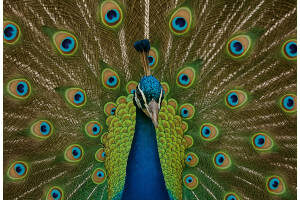
On one of these visits, we witnessed a peacock spread its plumage. I was awestruck. Until then, the image of a peacock had existed only in songs, poems, and picture books. But there it was, real and radiant. If it could hear me, I would have begged it to repeat the performance, over and over again.
Grateful for Mpoto’s compositions for reminding me of my younger days. In addition I found good material for reflection in Adela, Samahani Wanangu, Waite and chocheeni kuni and others. Two things happened over the weekend as I mulled over these numbers. One, the silence I sought was interrupted by music booming from my neighbours across the fence.
Bong Flava from Across the Fence
I could not hear the lyrics, but the beat was undeniably Bongo flava. There was a distinct voice of a young girl singing along loudly. It was clear from the way she was singing that she knew the lyrics by heart, and she was enjoying herself.
I could not help pondering that this music and its message will be etched in her mind forever and will ever serve as a reminder of this stage of her life. I know because there is music I will never forget; music which serves as landmarks and reminders of various stages of my life. Play the music and I lucidly relive those moments of my life as if it was happening in this very instance.
If the lyrics the girl is listening to, and now sadly the accompanying videos, are not good and no one helps the girl singing along unpack and properly process how these performances end up influencing her thinking, her goose could well be cooked, distorting the image she has of herself and alienating her from the best version of who God intended her to be.
The Weight of Words: Artists as Cultural Custodians
Unawaulizaje watu magongo ya nini wakati umesema kuna nyoka
Mrisho mpoto – chocheeni kuni
Why ask people why they are carrying sticks, yet you told them there is a snake?
I hope our musicians and artists are aware of the immense impact they have in shaping the minds of the youngsters who hear their music and adore their lifestyles. That they are taking this mandate, which they take on themselves through their creative compositions, with awareness of its impact and treat it with the seriousness it deserves.
The other thing is an article in the Saturday Nation that spoke to the material I was dealing with. We need more literary pundits to elucidate the place of these arts and how they should be used (and not used). That is why I enjoy the articles of Austin Bukenya and others in the Saturday Nation feature on literature, culture and arts. May the arts; visual arts, linguistic arts and performing arts continue being mirrors to us, may they not distort the beautiful images of ourselves for a better future.
Final Note: Check our Mrisho Mpoto
If you haven’t yet listened to Mrisho Mpoto, look him up on Spotify or YouTube. Let his spoken word, delivered in impeccable Kiswahili and set to music, sweep over you. You’re in for a treat.
caveat: I do not know the artist I just love his messages and how he delivers them.
I am always looking forward to your articles Marura wa mao!
Thank you Mghoi wa mao! Glad I make your day and grateful for the feedback. Keep reading I’ll keep them coming.
Very nice piece of work
Educative,informative and interestin
g worth reading over and over
Keep up the good job mriwa.
Thank you mriwa. Your feedback and words of encouragement mean a lot to me.
A thought provoking read on the music. As I drove my son listening to Sanfanthomas, he asked me if I have seen him live. I narrated reflecting his music was sung while I was young and how I loved it partly because my siblings listened and loved it ❤️. You capture the stories really well.
The first live musician performance I ever attended was that of Sam Fan Thomas at Nyayo stadium. It was electrifying and the man had energy – he sang and danced for hours. I doubt I have attended a better performance since. It was real value for money. And I love his music to date.
Thank you for reminding me of him.