
Reviving a Dying Craft: How One Woman Is Weaving Hope and Livelihoods in Taita

In the sun-baked lowlands of the Taita Hills, where rains are unpredictable and traditional farming barely sustains life, a quiet revolution is unfolding—led not by government programs or large NGOs, but by an elderly woman with no formal education and a passion for a dying craft.
These lowlands, once used seasonally for grazing and the cultivation of maize, beans, and cowpeas, were traditionally uninhabited. Even the dead were not buried here. But as population pressures mounted, more families migrated into these dry plains in search of land and opportunity. With them came poverty, driven by unreliable rainfall and limited economic options—especially for women.
Enter Mrs. Valery Mshai Kazonga.
Seeing both the hardship and potential around her, Mrs. Kazonga drew on something deeply rooted in her heritage: the art of weaving the traditional Taita basket. Once a staple in every home, the craft was fading—its intricate patterns and plant-based dyes replaced by plastic imports and fading memory.
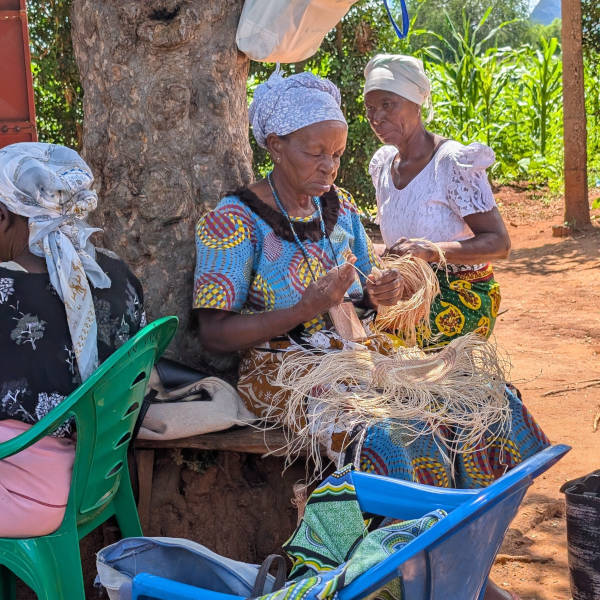
Rather than mourn its loss, she turned it into a solution.
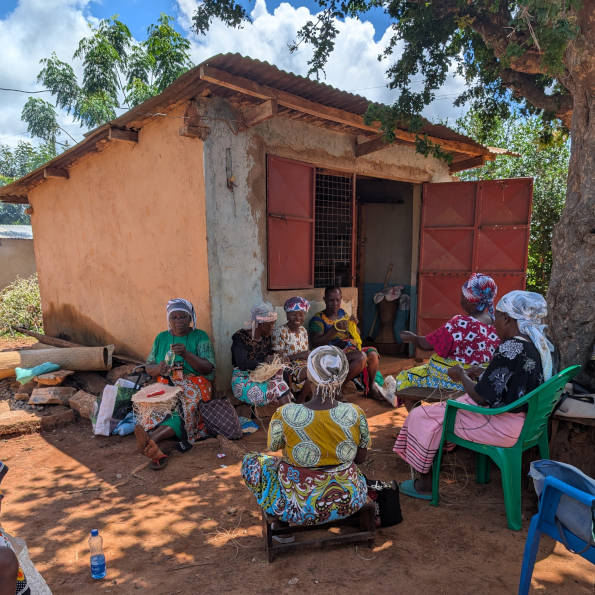
Gathering younger women around her homestead in Godoma, she reminded and taught them the art of weaving not just as tradition, but as enterprise. The Kanjado Weavers Women Group was born, a cooperative of craftswomen who meet every Monday under the guidance and leadership of Mrs. Kazonga.
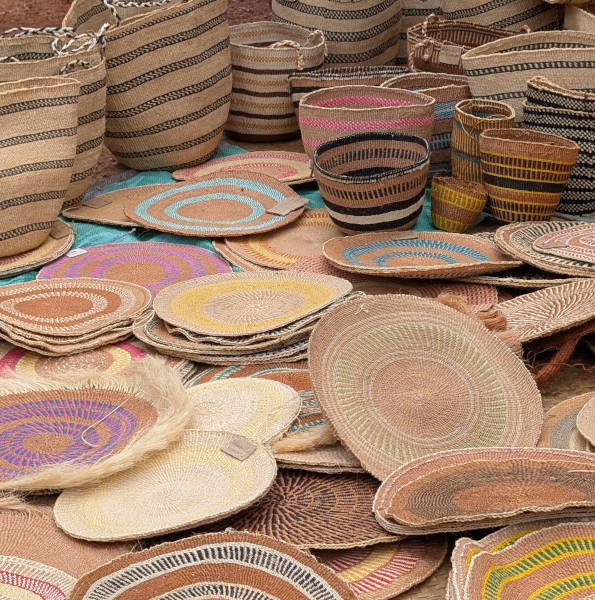
The baskets they weave are no longer just household containers. They’ve become handbags, table mats, lampshades, flower vases —functional art pieces that blend sustainability, culture, and design. Their work now reaches buyers across Kenya and abroad.
Every part of the basket tells a story. The fibre comes from sisal grown nearby. The colours—cool earthy tones—are drawn from indigenous trees and plants: mshigha, iti, mkunga, and the blossoms of msisina and igherugheru, not to mention the shrub mnyaghanyagha. Mud of swamps gives the sisal a deep charcoal colour. All the dyes are natural except when you desire a deep hue. The process is painstaking. Preparing the fibre is hard physical work; dyeing demands knowledge passed down through generations. And the weaving itself? A masterclass in patience and precision.
But it is more than just craft. It is community. It is dignity. It is livelihood.
Today, the Kanjado Weavers Women Group operates with a clear code: they meet weekly, maintain quality standards, and share responsibilities. Through their baskets, women are not only preserving a cultural legacy but also putting food on their tables, paying school fees, and reclaiming a sense of purpose in a harsh economic environment.
Mrs. Kazonga’s leadership is proof that grassroots innovation doesn’t need grants or degrees to flourish. It needs heart, vision, and a willingness to act. Her story is a reminder that in the most unlikely places, with the most humble tools, transformative leadership can emerge.
She didn’t wait for help. She wove it with her own hands and ingenuity.
A lovely read and great job from the Kanjado weavers!
Impressive,worthy publicising and supporting.
Absolutely Ephemia. Let us publicise and support in whatever way we are able.
A beautiful read and great job to the Kanjado weavers!
This is Amazing ! Well done to her & the Group. May they Continue to Flourish. Yes indeed starting with what you have & being disciplined in whatever you set out to do .
Wow! That is very impressive; well done to them!